Call of World War Fire Duty
- 3.2
- Rating
- 1.00M
- Installs
- Free
- Price
 Analysis by App-foxy
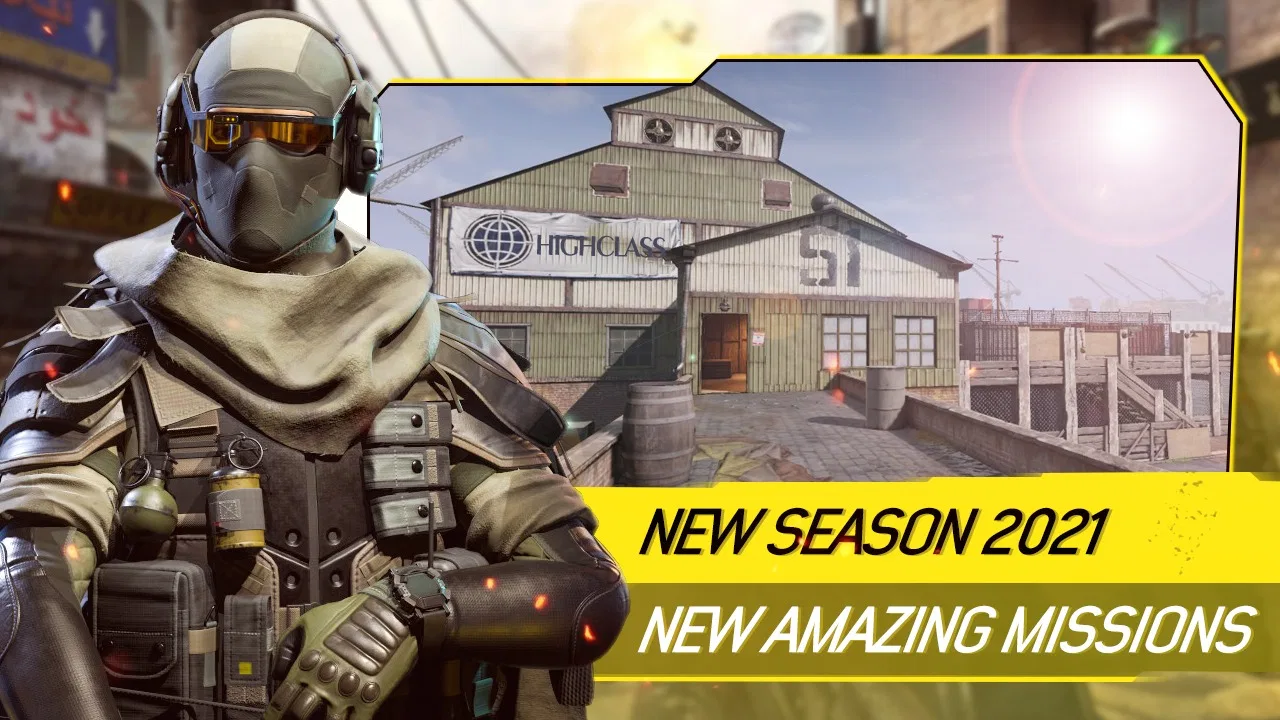
Call of World War Fire Duty is a free adventure game built around a simple promise: step into a war-themed encounter, take action, and see whether the next attempt feels more successful than the last. I approached it as a quick mobile shooter rather than a deep military simulation, and that distinction matters. Its appeal comes from immediate movement and combat, while its weaknesses appear when you expect the layered strategy, polished storytelling, or long-term progression found in bigger alternatives.
The game is made by Shooting Games For Teenagers and carries a Teen content rating, so it is aimed at players who are comfortable with fictional combat and a more intense battlefield theme. It has passed the one-million-install mark, which makes it easy to see why someone might discover it while looking for a compact war adventure. My overall impression is mixed but useful: it can provide short bursts of action, yet it is best approached with modest expectations and a willingness to accept a straightforward design.
How the action loop feels from the first encounter
I find the first encounter most useful as a quick test of fit: whether the controls feel comfortable, the action is easy to read, and the pace suits a short mobile session. Rather than rushing to decide if the whole game is for you, I’d pay attention to which moments feel unclear or awkward, since that can help separate a brief learning curve from a genuine mismatch.
You May Also Like

 Blood Strike: 2.5 Anniversary
Blood Strike’s Loadouts Turn Every Drop Into a Tactical Gamble
A close look at Blood Strike’s custom loadouts: how fast access to signature weapons reshapes its battle royale rhythm, rewards preparation, and narrows the gap between fights.

 Pandora - Music & Podcasts
Pandora’s Music Is Easy to Start, but Harder to Recover
Pandora’s strength is its low-effort path from a seed to a station. Its weak spot is how much confidence it asks you to place in connection, setup, and quiet recovery.

 8 Ball Pool
 Is Built on Rivalries, Rematches, and Routine
A close look at the rivalries, rematches, shared routines, and unanswered safety questions that turn a quick pool match into a persistent mobile community.

 Samsung Music
’s Quiet Strength Is Playing What You Already Own
Its reach comes less from spectacle than from dependable access to a personal library. That simplicity is both the app’s strongest retention engine and its ceiling.

 AccuWeather: Weather Radar
AccuWeather Review: A Quick, Clear Forecast for Everyday Decisions
For everyday plans, the best forecast is the one you can understand quickly. AccuWeather makes rain timing, radar, and local conditions easy to act on, with a few trade-offs.

 Hill Climb Racing
Why Hill Climb Racing Still Turns Crashes Into One More Run
A tiny car, a bumpy hill and one more upgrade: Hill Climb Racing keeps resurfacing because its simple chaos makes every near-miss feel personal.
More From Our News Desk
View All News


The first action is deliberately direct
The opening appeal is that the game does not need much explanation before you understand its basic purpose. You enter a conflict, look for the next target or objective, and begin acting rather than spending a long time studying menus. For players who want a war-themed game they can pick up without learning a complicated control system, that directness is welcome.
I found the first few moments more useful as a test of comfort than as a showcase of depth. The important question is whether the on-screen controls feel natural to your hands and whether the pace gives you enough time to react. On a phone, small control issues become noticeable quickly. A control layout that feels manageable in a short encounter may become tiring when you repeat the same motions across several attempts.
The setting gives the game a recognizable identity, but it should not be confused with a historical campaign. The store summary frames the experience around the Cold War and becoming a legend while conquering the world, yet the practical experience is closer to an accessible action game than a carefully researched military story. I would choose it for the mood of a world conflict, not for accurate history or a detailed geopolitical narrative.
That difference is one of the first useful decisions for a potential player. If you want a game that starts quickly and keeps the focus on immediate encounters, this format makes sense. If you are looking for a large map, elaborate squad management, or a campaign where every decision changes the wider war, a dedicated strategy game will probably suit you better.
Feedback matters more than the theme
The central rhythm is easy to describe: act, observe the result, collect whatever progress the encounter provides, and decide whether to continue. Good mobile action depends on that feedback arriving clearly. You need to know when an attack worked, when danger is increasing, and when an encounter has ended. In my experience, the satisfaction is strongest when the game lets you connect your input with an immediate outcome instead of making every action feel delayed or uncertain.
This is also where the game’s limitations become visible. A simple action loop can be enjoyable for a while, but it has less room to surprise you than a game with multiple character roles, equipment choices, or mission types. When the next encounter resembles the previous one too closely, the feeling of discovery fades and the game becomes something you play for a few minutes rather than something you plan your day around.
I recommend treating each attempt as a short challenge instead of expecting a long uninterrupted session. That approach makes the straightforward design feel intentional. You can play during a break, after finishing a task, or while waiting for transport, then stop before repetition becomes the main thing you notice.
What the reward rhythm encourages
The reward in a game like this is not only the result shown at the end of an encounter. There is also the small personal reward of handling a situation more cleanly than before. Maybe you react sooner, position yourself with less hesitation, or finish an exchange without wasting movement. Those improvements are easy to overlook, but they are what give a basic action game a reason to be replayed.
For me, the most practical way to enjoy the progression is to set a narrow goal for each session. Instead of playing until the game feels repetitive, I would enter with one purpose: complete an encounter, improve control familiarity, or see whether the next stage changes the pace. This creates a clearer sense of progress even when the game itself keeps its systems relatively simple.
Players should also separate visible progress from meaningful variety. A new unlock or completed objective can make the next attempt feel worthwhile, but it does not automatically solve repetition. The real test is whether the reward changes how you approach the next encounter. If it only tells you that you have played more, the motivation will be weaker than in a game where progress opens a genuinely different tactical option.
The most useful habit is to judge every reward by what it changes in your next attempt. If it changes your choices, it has lasting value. If it only fills a progress bar, enjoy the moment but do not expect it to transform the experience.
Why another session begins
The reset is a normal part of the loop: an encounter ends, the immediate tension disappears, and you decide whether to begin again. This reset can work well on mobile because it gives you a natural stopping point. You do not need to commit to a long campaign every time you open the game, and that makes it easier to fit around everyday routines.
A realistic use case would be a short evening break after work or school. I might play one encounter while waiting for dinner, stop when the result screen appears, and return later if I still want a quick action fix. The game is more comfortable in that role than as a title I would reserve an entire evening for. Its compact loop supports casual repetition, but the same repetition can feel thin if you are searching for a constantly changing adventure.
The reset also offers a chance to correct mistakes. Rather than seeing failure as a reason to abandon the game immediately, I would use the next attempt to change one thing at a time. Move with more patience, pay closer attention to the encounter’s rhythm, and avoid making several rushed decisions at once. This is a practical way to get more from a modest game without pretending it has a complex training system.
Controls, device expectations, and comfort
Call of World War Fire Duty supports devices running Android 5.1 or later, so compatibility reaches back to older phones and tablets. That broad system requirement is helpful for players who do not own a recent device, although compatibility alone does not guarantee an equally comfortable experience on every screen size. A smaller display can make touch controls feel crowded, while a larger one may make the action easier to read.
I would test the game for a few minutes before deciding whether it belongs on a main device. Pay attention to hand position, how often your thumb covers important visual information, and whether repeated actions cause fatigue. These details are more important than the war theme when you are deciding whether you will actually return to the game.
Another practical point is to avoid judging the whole experience from a single rushed session. The first attempt is partly about learning how the game communicates danger and success. Once that language becomes familiar, the action may feel more predictable. If the controls still feel awkward after that adjustment, the problem is probably not lack of practice; it is simply a mismatch between the game and your preferred mobile control style.
How it compares with familiar alternatives
Compared with large military shooters, this game is easier to approach but much less ambitious. Big competitors usually offer stronger presentation, richer audio, more elaborate multiplayer structures, or deeper progression. They are better choices when you want a long-term hobby, social competition, or a convincing battlefield atmosphere. Their trade-off is that they often demand more storage, stronger hardware, more time, and greater attention.
Compared with strategy games set around global conflict, this title puts less emphasis on planning and more on direct encounters. A strategy alternative is preferable if you enjoy managing resources, choosing alliances, studying a map, or winning through preparation rather than reflex. Call of World War Fire Duty is the better fit when you want to feel involved immediately and do not want to spend the first part of a session arranging a larger operation.
It also differs from story-driven adventure games. Those titles usually build attachment through characters, dialogue, exploration, and carefully staged discoveries. Here, the main reason to continue is the action loop itself. If you need a strong narrative to keep you interested, this may feel bare. If you prefer a game where the next attempt begins quickly and the controls matter more than extended conversations, its simplicity can be an advantage.
Who should play it and who should skip it
I would recommend trying it if you enjoy short war-themed action sessions, prefer free games, and like learning a basic loop through repetition. It can work for younger and older Teen players who want fictional combat without committing to a large, complicated title. The one-million-plus install figure suggests that the format has found an audience, but popularity does not remove the need to check whether its pace matches your taste.
I would skip it if your priority is realism, historical detail, deep customization, or a campaign with a strong emotional story. I would also look elsewhere if repetitive encounters quickly lose your attention. A more advanced shooter will offer greater variety, while a strategy title will give you more meaningful control over the wider conflict. Choosing one of those alternatives is not a criticism of this game; it simply reflects a different reason for playing.
The Teen rating should be taken seriously when deciding whether it is suitable for a younger player. The war setting and combat focus are central to the identity of the game, not background decoration. I would also suggest that parents look at the game together with the player and decide whether this style of fictional conflict fits their household expectations.
Performance expectations and the version to install
The current version is 400, which tells me the game has an established release line rather than being presented as a brand-new experiment. It first appeared on July 1, 2021, so the overall design belongs to an earlier stage of the mobile gaming landscape. That age is not automatically negative, but it helps explain why the experience may feel more basic beside newer games with smoother interfaces and more elaborate systems.
It is free to download, making the initial decision easy: install it, test the controls, and remove it if the loop does not hold your attention. I would not approach the free price as a promise of unlimited depth. Instead, I would use the low entry barrier to evaluate three things quickly: whether the action feels responsive, whether the visual feedback is clear, and whether the next encounter gives you a reason to continue.
The average rating is 3.2 from around five thousand ratings, with just over one hundred written reviews. I read that as a sign to keep expectations balanced. There is enough interest for the concept to attract a substantial audience, but the score does not suggest universal satisfaction. In practical terms, it is a game worth testing rather than one I would recommend blindly to every mobile player.
Small techniques that make short sessions better
My first tip is to use the opening moments of each encounter as a reading phase. Do not rush every action immediately. Watch how the situation develops, identify the most urgent threat, and then commit. This is especially useful on touchscreens, where panic can lead to accidental movement or poorly timed attacks.
Second, stop after a clean result instead of automatically starting another session. The reset is part of the game’s appeal, but endless repetition can turn a satisfying loop into background noise. Ending on a good attempt preserves the feeling that you improved, and it makes returning later more appealing.
Third, compare your decisions rather than only your final result. If an attempt goes badly, ask whether the issue was timing, positioning, or simply rushing. Changing one behavior on the next run gives the game a small layer of self-directed strategy. It is not a substitute for a deep tactical system, but it can make the available action feel more deliberate.
Finally, use the game as a focused break rather than as a replacement for a full adventure. Its strongest use case is a compact encounter with a clear beginning and end. When I keep that boundary in mind, the straightforward design feels less like a missing feature and more like a practical choice for quick play.
My verdict on the complete loop
Call of World War Fire Duty succeeds when its first action arrives quickly, its feedback is understandable, and the next session feels like a chance to improve. It is less successful when repetition becomes more noticeable than the battlefield theme. The game’s appeal is therefore narrow but genuine: it offers an accessible, free adventure experience for players who want direct war-themed action without the weight of a major shooter or strategy campaign.
I would recommend downloading it for a trial if you have an older compatible device, enjoy short mobile sessions, and are comfortable with a Teen-rated combat setting. I would not present it as a replacement for a premium military game or a serious historical adventure. The right expectation is a simple action loop: enter, react, finish, reset, and decide whether the next attempt can be cleaner.
My final opinion is cautiously positive for casual players and reserved for everyone else. When I play it in short bursts, the immediate structure gives me enough reason to return. When I expect deep variety, detailed storytelling, or long-term strategic decisions, the experience falls short. Choose it for quick battlefield action, not for a complete war simulation.
FAQs for Call of World War Fire Duty
01What is Call of World War Fire Duty about?
Call of World War Fire Duty is an immersive action-packed mobile game that transports players back to the intense battlefields of World War II. Players can engage in various missions, experiencing the thrill of combat with realistic graphics and a wide range of weapons. This game is designed for those who love strategic warfare and historical settings.
02Is Call of World War Fire Duty free to play?
The game is free to download and play, offering a solid amount of content at no cost. However, it includes in-app purchases for additional items, weapons, and upgrades that can enhance gameplay. While these purchases aren't necessary to enjoy the game, they can provide a more comprehensive experience for dedicated players.
03What devices are compatible with Call of World War Fire Duty?
Call of World War Fire Duty is available for both Android and iOS devices. To ensure smooth gameplay, it’s recommended that players have a device running Android 7.0 or higher, or iOS 11.0 and above. It’s important to check the device compatibility and free up sufficient storage space before downloading.
04Does Call of World War Fire Duty require an internet connection?
To play Call of World War Fire Duty, an internet connection is required, especially for accessing multiplayer modes and syncing your game progress. Some single-player missions can be played offline, but the full experience, including leaderboards and events, necessitates being online.
05How can I ensure a smooth gaming experience in Call of World War Fire Duty?
To enjoy a seamless experience, ensure your device meets the minimum system requirements and regularly update the app to the latest version. Closing background apps can also improve performance. If you encounter any issues, clearing the cache or reinstalling the game might help resolve them.
Pros
- Immersive graphics and sound design.
- Wide variety of weapons and missions.
- Smooth controls enhance gameplay.
- Multiplayer mode for team battles.
- Regular updates with new features.
Cons
- Requires high storage space.
- In-app purchases can be costly.
- Occasional connectivity issues.
- Battery drains quickly during play.
- Ads can interrupt gaming experience.

Call of World War Fire Duty
Gallery